While everyone wants to
visit places to see interesting things we all want authentic experiences and
Cuba certainly provides those. Look through the sections of this page to see
some of the things that you can experience in Cuba.
The Caribbean is known for its wildlife, and naturally Cuba is no exception. However,
if you don't know what you're looking for, you can miss an awful lot - especially with the
world's smallest humming bird, and a frog smaller than a penny are endemic to the island!
Here's a guide to the animals of Cuba that you should look out for on your visit to the
island.
Firstly, birdwatching in Cuba is reason to visit in itself, and the Caribbean's avian
life is both graceful and colourful. Here are some of the more memorable birds you might
see amidst Cuba's wildlife:
The Cuban Trogan
Known as Cuba's national bird, because it shares the same colours as the Cuban flag -
blue, red and white. Found in forests near streams, it is notable for its dark green head
and wings, bright red belly and white chest. They feed on insects, fruits and by hovering
on flowers.
Bee Hummingbird
The world's smallest bird is endemic to the island, and a highlight of Cuba's
birdwatching scene. Growing to a maximum length of 2.25 inches, it's typically found in
valleys, gardens and forests but has been labelled as 'threatened' since 2000 due to a
loss of its natural habitats.
Cuban Finch
Another small species, the Cuban Finch is 3 and a half inches of impressive energy!
Nesting in shrubs, it is best known for its beautiful yellow head, which males can fluff
up to attract mates!
Cuban Parakeet
The Cuban Parakeet, once a common sight for those birdwatching in Cuba has now become
something of a rarity thanks to destruction of habitat and trapping, as it was regarded as
a crop pest.
Those birdwatching in Cuba will likely find it in grasslands with palms, woodland edges
and in undisturbed forests. You should be able to spot it easily enough - it is bright
green with red spots on the head, neck and breast with red on the bend of the wing, and a
white band of flesh around the eyes.
Cuban Kite
In a distressingly familiar theme, the beautiful Cuba Kite is classified as 'critically
endangered' due to habitat loss. In fact, it was thought extinct until 3 Cuban Kites were
found on the east of the island.
The bird of prey lives in heavily forested land, and is thought to feed mainly on
snails.
Moving away from the opportunities for birdwatching that Cuba offers, the wildlife of
the island is equally impressive, though sadly in many cases the animals of Cuba are
equally endangered.
Cuban Hutia
The Cuban Hutia is the largest endemic land animal that Cuba has to offer, growing on
average to be around 60 centimetres in length. If you're looking to catch a sight of one
of these during your Cuban travel, you're best off looking around the forests and rocky
areas of the island, where you may spy the animal going about its daily business. It's an
omnivore and eats a combination of fruits, small reptiles, small mammals and leaves.
Cuban Solenodon
This insectivore was, like the Cuban Kite, once thought to be extinct, but has now been
'upgraded' to endangered status. You are unlikely to spy this sample of Cuba's wildlife by
chance, as it is largely nocturnal, and spends its days hiding in trees and under rocks,
mainly in forests and thick shrub habitats.
Cuban Boa
Listed as near threatened, those with a fear of snakes shouldn't worry about running
into one of these by chance! Also known as the Cuban Tree boa, thanks to the amount of
time it spends up in trees, those looking to see one in the wildlife of Cuba are best of
searching in woodland and rocky habitats.
Cuban Treefrog
Also up in the trees (unsurprisingly) is the Cuban Treefrog. If you're hoping to catch
sight of one amongst the Cuban wildlife, you will need to be around at night, when it is
active. It's carnivorous, and will eat pretty much anything it can catch, but even though
it's the largest species of treefrog in North America, that doesn't extend to humans!
Monte Iberia Dwarf Eleuth
The text for its name in this article actually takes up more space than the frog
itself! Growing to just 0.8mm long, you could fit 2-3 of these endangered frogs on a
single penny piece. It's small size and endangered status isn't the only reason you're
unlikely to spy one on holiday - they're also nocturnal, finding cover in the daytime.
The animals of Cuba are simply breathtaking, and the endangered nature of many of the
creatures means that seeing some of the species is likely a once in a lifetime experience.
Whether you're in Cuba for birdwatching, or simply taking in the history, an exploration
of the wildlife is a fascinating way to spend a few days.
About the Author
Emma Lelliott is the general manager of Captivating Cuba, an
independent Cuba holiday specialist. With offices in Havana and the UK, Captivating Cuba
can design tailor made Cuba bird watching holidays to ensure you see the fascinating avian
life in their amazing natural habitat.
The
island of Cuba is located in the Caribbean, between the North Atlantic Ocean
and the Caribbean Sea. The United States and the Bahamas lie to the north of
Cuba, Mexico to the west, Jamaica and the Cayman Islands to the south and
the Dominican Republic and Haiti to the southeast.
Cuba
is a popular Caribbean destination for direct holidays, particularly with
nature lovers due to its well preserved ecosystems, amazing landscapes and
its huge array of flora and fauna. The Cuban archipelago is home to more
than 6,500 species of higher plants (50 percent of which are native), 650
vertebrates including 350 species of birds and more than 14,000 species of
invertebrates. Cuba is also home to the world's smallest bird, the bee
hummingbird and the world's smallest frog which is just 12 millimetres long.
Cuba
is blessed with lush green tropical forests with rare orchids, dry mountain
areas with prehistoric cacti, mangrove everglades which are home to manatee
and flamingo's, wetlands and hummocks (earth mounds) which guard fossilized
plants such as the cork palm.
Follow
the hiking trails and nature paths to explore this truly amazing island. The
following are just a few of the ecotourism highlights not to be missed on
your package holidays to Cuba.
The
Sierra del Rosario - Biosphere Reserve
Located at the eastern part of the Guaniguanico Mountain range between Pinar
del Rio and the Havana provinces. Houses the Santo Tomas cave system and
Soroa-Las Terrazas.
The
Guanahacabibes Peninsula - Biosphere Reserve
Located in Pinar del Rio Province on Cuba's westernmost point. Protected
areas include La Guabina and Mil Cumbres.
The
Zapata Peninsula Nature Park - Biosphere Reserve
Located in Matanzas Province, this is the largest wetland in the Caribbean.
Home to La Boca crocodile farm, Laguna del Tesoro and the Amerindian
Village, Caleta Buena, Playa Giron and Playa Larga.
Baconao Park - Biosphere Reserve
Located about 12 miles from Santiago de Cuba city. Home to La Gran Piedra,
the ruins of Cuba's first French coffee plantations.
The
Guamuhaya Mountain Range
Home
to Topes de Collantes Tourism Complex, Zaza, Tunas and Lebridge wild animal
reserves and El Nicho.
The
Guaniguanico Mountain Range
An
agricultural heartland with unusual rock formations surrounding the Vinales
Valley.
Baracoa
This
is where Christopher Columbus first set foot in Cuba. Virtually untouched by
civilization, the area is marked by Alejandro de Humboldt National Park,
Yunque de Baracoa, the Toa, Miel and Yumuri Rivers and Maguana Beach.
Sierra
Maestra
Home
to the islands historical hideouts, the area covers Desembarco del Granma
National Park, Pico National Park, Marea del Portillo and Santo Domingo-La
Sierrita.
Sierra
de Cubitas
Stretching from El Paso de los Paredones to Hoyo de Bonet to Cayo Ballenatos
and the protected area in the northern Camaguey Keys.
Northern Holguin
Includes Pinares de Mayari National Park and Guardalavaca-Estero Ciego.
Emma
Healey is the co-founder and owner of holidayholiday.co.uk, specialists in
holiday packages and
last minute holidays to worldwide
destination. Thanks for taking the time to read my article and be sure to
watch out for more of my articles as im writing many travel blogs and have
some great topics coming soon.
Nearly anyone will tell you their country is the most beautiful in the world
but when a Cuban makes this statement you can believe it! Cuba is a nation
that values its natural resources and treasures its natural habitats and the
wildlife within them. Being economically isolated for so long, this island
recognized decades ago that it must nourish and preserve its natural
resources. You will find astonishingly beautiful and largely untouched
natural wonders here when you visit on one of the many Cuba education tours
available.
Zapata Swamp in the Matanzas province is less than 93 miles from Havana and
a natural wonder that environmentalists and nature lovers alike will enjoy.
Here you can see the Cuban Crocodile, Cuba's national symbol as it resembles
the shape of the island when its mouth is open. There are nearly 200 species
of birds, over 1,000 invertebrates and 31 species of reptiles. You can hear
the songs of the Zapata sparrow, the Zapata wren and over 65 types of birds
that migrate from North America. This unique swamp is the best preserved
wetlands in the Antilles, over a million acres of salt marsh, forests,
lakes, rivers, blue-water beaches and ponds. You'll find flooded caverns as
well as swamp prairies, colorful flamingos and the bee hummingbirds, the
world's smallest bird. Next door to the Zapata Swamp is the Bay of Pigs,
breeding ground to millions of land crabs each spring.
Vinales Valley is a UNESCO World Heritage site, a beautiful and fertile
valley where you can see farmers employed traditional agricultural methods.
There are no huge, monstrous machines but skilled people intimately working
the land. You can see caves in the hill faces and magnificent cliffs called
mogotes.
that
includes this particular destination. You'll be astounded at the natural
beauty and vibrant colors of the flora and fauna in this remarkable natural
formation.
Peninsula Guanahacabibes, a UNESCO Biosphere Reserve and National Park, is
on the western most point of Cuba. It is an important fishing resource for
red snapper and spiny lobster; the Guanahacabibes National Park is one of
the island's largest natural reserves, separated from the bulk of the island
by beautiful white sand plains that border one of Cuba's lakeside areas. On
this peninsula you will find 42 families of birds, several species of marine
turtles, coral reefs and a coast lined with cays and islands. You will also
find more than a hundred archeological sites formerly occupied by aborigines
fleeing from Spanish conquistadors and the site of Cuba's first forced labor
camp dating back to 1960.
Topes de Collantes is another reserve park definitely worth a stop when you
book of the authentic Cuba tours that are available. Located in the
Escambray Mountains, it is famous as one of the hiding places of
anti-Batista rebels back in the 1960s. Here you can see beautiful mountains
covered with lush vegetation that provides a refuge for many species of
animals. The warm, moist winds of the Atlantic have helped form ecosystems
that have been designated UNESCO World Heritage sites. You'll find beautiful
waterfalls feeding pristine rivers and streams, be able to hike through
canyons and grottos and see naturally formed pools of clear water. More than
40 species of orchids and 100 species of ferns grow here along with jasmine,
begonias, plantain and banana trees and 40 species of coffee.
There is so much beauty on the island of Cuba! Booking a tour with an
authentic Cuba travel agency will insure that you see all the natural
wonders that the island has to offer.
If
you enjoy hiking and rock climbing you'll want to book one of the
Cuba education tours
There is so much beauty on the island of Cuba! Booking a tour with an
authentic Cuba travel agency will insure
that you see all the natural wonders that the island has to offer.
If you are
looking for a tourist destination, try Cuba. Cuba in no time has become one
of the hottest tourist destinations. It is not only known for its rich Cuban
culture and buildings, but also for its fascinating events and festivals.
People, who seek complete entertainment package, must definitely attend
Cuban festivals and events. These events offer great combination of joyful
music, dances, exotic foods and lots of happiness.
Festivals and
events are the prominent part of Cuban culture. Festivals give them
opportunity to socialize while celebrating the festivity. People from all
over the world come to Cuba to experience and witness the glimpse of Cuban
tradition. Some of the popular events and festivals are as follows:
Havana
International Guitar Festival
Leo Brouwer, one
of the popular Cuban guitarists, founded this festival in 1982. It is
generally organized in the month of May. This festival offers a platform to
guitarists coming from Cuba and all over the world to compete and providing
entertainment.
The Pepe Trova
Festival
Pepe Trova
Festival was started in the memory of a popular Cuban composer, Jose Pepe
Sanchez. This festival is generally organized in Casa de la Trova and Sala
de Concierto Dolores every year.
Highly lively and
creative musicians and artists from various parts of the planet come to Cuba
to showcase their talents and skillfulness to the delighted spectators. In
addition, the music is convoyed with other cultural activities and delicious
foods.
The International
Havana Jazz Festival
This festival is
warmly celebrated every year in the month of February. It is counted among
the most appealing events liked by natives of Cuba as well as the foreign
visitors. Havana Jazz festival was at first started at Casa de la Cultura as
a form of local entertainment in 1978.
The festival
presents great combination of International and classic Cuban Jazz. Popular
Cuban Jazz celebrities such as Gonzalo Rubalcaba, Eman Lopez, Chucho Valdes
and Bobby Carcasses together with international stars such as Ronnie Scott,
Dizzie Gillespie and Steve Coleman perform at the festival.
Low-Budget Film
Festival
Movie lovers can
enjoy movies during the Low Budget Film festival at Gibara town. This
festival is organized every year to display awarding documentary, action and
reality films. Apart from films, the festival also organizes extraordinary
art exhibitions, concerts and recitals. The main aim of this festival is to
encourage and empower creative artistes in Cuba.
Cuban festival
means fun, music, food and lots of thrill. If you are short of money and
wish to spend your weekend in some happening place, try Cuba for sure. Cuba
is not a big country, but has much to offer.
If you want to
see another planet consisting of rich traditional diversities in a balanced
proportion, visit Cuba. Events and festivals happening here can make your
day full with awesome experience. If you are looking for
authentic cuba travel
or cuba
tours,
check out a reputed Cuban travel website and sort out all your issues
regarding your great visit.
Every client or
co-worker who has returned from a trip to Cuba has complained about how
awful the food is. I can see that would be true if they stayed in Varadero
where everything is geared toward the tourist. I spent 3 nights there - one
night upon arrival and two more before my departure flight. I found the
service in the restaurants to be surly at best and the food to be hardly
edible. Just the opposite was true in Havana.
Casa Nelsy, where
I stayed, is in the Vedado district of Havana, just one block away from the
Havana Libre Hotel. I ate breakfast in that hotel every morning. It caters
to the large motorcoach tours and their food and service was exactly as I
found it in Varadero. Lunch and dinner in the local restaurants, however,
were excellent every day.
Directly across
the street from the Havana Libre Hotel, on the south west corner of L Street
& 25th Avenue, is WAOO!!! Snack Bar & Restaurant. (It is pronounced
WOW and it lives up to its name.)
It is a happening
place with a full-service bar, an excellent menu for lunch and dinner, and
the most amazing cappuccino topped with whipped cream and sprinkled with
cinnamon for only $2.
The restaurant is
L-shaped and reminded me of a large coffee shop here at home, except that
the tables are dressed with white linen tablecloths and gold linen napkins.
The big windows on both sides open fully to allow the breeze to keep it
cool. There is no bad table in the place. The staff are great eye candy,
male and female, and wonderfully friendly. I had either a drink, an
appetizer, lunch or dinner there every day, never spending more than $8.00 (CUC
1.00 = USD 1.00). The food is cooked to perfection and beautifully
presented. If they had been open before 11:00 a.m., I would have eaten
breakfast there every day. It was my favourite place to just sit and people
watch.
Across the street
from WAOO!!! on the south east corner of that intersection is CIBO,
an Italian restaurant. A doorman escorted us through a locked entrance that
opened into an extremely attractive dining room of black & white checked
tablecloths and an Elton John video playing quietly from a 32" TV mounted on
the wall in the corner.
My perfectly
grilled white fish came served on a bed of rice pilaf topped with a mango
chutney and accompanied by al dente grilled vegetables and yucca root, all
for $8.00. And you couldn't ask for better service. They were as
professional as any fine dining restaurant anywhere in the world.
A few doors west
of WAOO!!! is Monaquito, a hole-in-the-wall restaurant set back from
the street. Here we sat on white plastic patio chairs and ate on white
plastic tables covered with bright, plastic tablecloths. There is no
atmosphere here and the presentation isn't great but the food is good and
plentiful.
The pork lomo, 4
thick slices of smoked pork tenderloin, is fork tender and oh, so tasty! It
comes with the traditional Cuban brown beans & rice to which they've added
just a hint of chili seasoning, salad, and hot, crispy sweet potato fries.
At only $6.00 there is enough food for 2 people. I took the extra back to
the fridge in my room to have for lunch the next day.
If you walk one
block south on 25th Avenue, just after you cross K Street you come to La
Moraleja, attractive open-air dining tucked in behind the buildings on
the street. I didn't eat there but went in to see the layout and menu. Their
one closed in building that is fully air conditioned tempted me to stop and
enjoy a sangria on that hot afternoon. Here you will find friendly staff,
professional service, and menu items like lamb and rabbit.
On K Street
between 23rd & 25th (only odd numbered avenues in Vedado), is Meson
Sancho Panza, a Spanish restaurant where I lingered beside a quiet fish
pond and enjoyed my favourite meal in Cuba. We dined early at 5;30 p.m. and
had the whole restaurant to ourselves. When we returned another night at 7
it was full and we couldn't get in. Many local residents eat here.
My fillet of
moist white fish reached both sides of my 10" plate and was 3/4" thick.
Sometimes I find fish either dry or not cooked enough. This one was perfect.
It was drizzled with a lime glaze and served on a bed of saffron rice that
had been drizzled with a mustard sauce. It was accompanied by a side of
vegetables that had been lightly grilled with a medley of herbs.
Talk about an
explosion of delightful flavours in my mouth! Never in my life have I eaten
another meal as tantalizing as that! In a fine dining restaurant at home it
would have cost $18 to $20. In Cuba, it was $8.99!
I wasn't
expecting to be writing about food and I don't normally take photos of my
dinner. Now I'm sorry I didn't think to do so because all these meals were
as appetizing to look as as they were to eat.
If I could find
dining adventures this enticing within two blocks either direction of my
Casa, I'm sure there are lots more throughout all the areas of Havana to
delight any foodie.
If you would like
to know more about fine dining in destinations around the world or any
travel related information, please contact me at
travelwithlindy@gmail.com
or check out my website at
http://travelwithlindy.com
The beginning of the
Art Deco era officially started in 1925 when the Paris
Exposition Internationale des Arts Décoratifs et Industrieles Modernes took
place. Even though Art Deco started emerging as early as 1908, the year 1925
was when the movement's principal forms were defined. The world embraced
this new, simple style which reflected the modern way of life of the Machine
Age. It quickly spread from Europe to North America and many other parts of
the world, including Cuba. Art Deco became so popular that it not only
appeared as a new style in architecture and visual arts, but it also
influenced fashion, graphic design and popular culture.
The first buildings in
Art Deco style appeared in Havana in 1927. One was a private house in the
residential neighborhood of Miramar and the other a five storey apartment
building in Centro Havana. Besides many smaller private homes, mostly in El
Vedado and Centro Havana neighborhoods, the most notable buildings from the
early Art Deco period are Edificio
Bacardí (1930), Hotel
Nacional (1930)
and Edificio
López Serrano (1932).
Visual artists, just
like architects, were influenced by their counterparts in Europe and North
America. In painting, though, it is sometimes difficult to classify works of
some artists within the Art Deco style. Painters adopted the basic
principles of Art Deco, but at the same time, created art with very strong
native and Afro-Cuban influences. The best representatives of Cuban Art Deco
painting are Amelia Paláez, Antonio Gattorno and Victor Manuel García.
With the introduction
of various magazines, posters and ads, graphic design flourished, especially
during the period between the two world wars. José Hernández Cárdenas,
Enrique García Cabrera, Jaime Valls and Conrado Massaguer were the most
notable graphic designers of this period. They created magazine cover pages,
book covers, magazine ads and posters, and some of them, like Massaguer,
were simultaneously working for both Cuban and American publications.
With easily
recognizable Art Deco style, lots of exposure and numerous commissions,
Cuban sculpture in this period, especially in the 20's and 30's, reached a
Golden Age. Artists created sculptures and fountains for open public spaces,
decorative bas-relief panels and other interior and exterior decorative
elements for public buildings and private homes. Many sculptors were also
involved in designing mausoleums for prominent families at Havana's
Cristóbal Colón cemetery. The most famous sculptors of this era were Juan
José Sicre and his student, Rita Longa. Sicre's work includes the monumental
seated figure of José Martí, winner of a public contest for the Memorial de
la Plaza Cívica (now Plaza de la Revolución). Sculptures by Rita Longa can
be found all around Havana, but the best three, according to art critics and
historians, are Fuente
de los Mártires,
a fountain located in Old Havana, Grupo
Familiar, a
cast bronze deer family, located at the entrance of the Havana Zoo, and a
statue of the Virgen
del Camino,
located in a suburban Havana park. Rita Longa's Ballerina at
the entrance of the Tropicana cabaret is, to this day, one of the most
recognizable symbols of Havana.
To learn more about
Cuban art throughout history and the latest events on the contemporary Cuban
art scene, or to explore our extensive gallery of Cuban contemporary art,
please visit http://yemayart.com.
Who
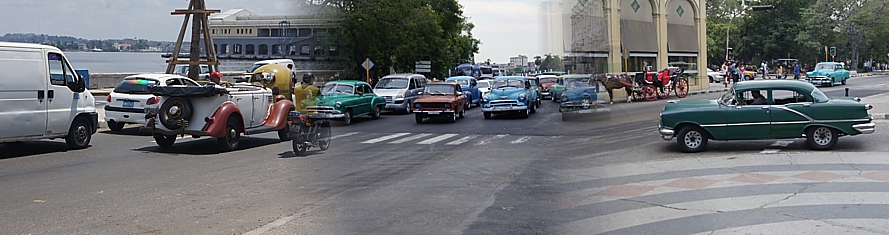
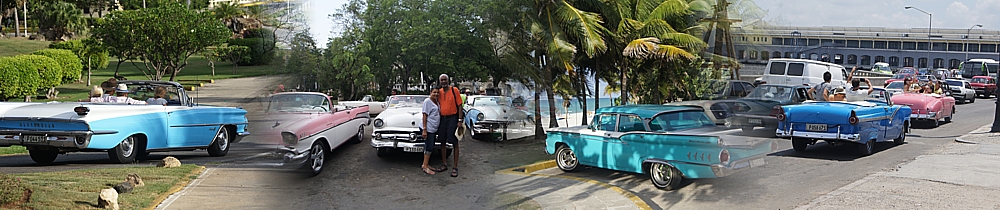
would ever think that old cars would be a tourist attraction but in Cuba
they are. Not as objects in a museum but running on the roads every day. Now
you would expect to see some old cars in Cuba but there are so many, indeed
much more than new cars. When we say
old cars do not be mistaken and think that these are beat up jalopies. Yes
some certainly look their age but many are in pristine condition.
When we say old cars we are talking about car models from the 1940’s and
1950’s. Old
American car models Ford, Oldsmobile, Cadillac, Chevy, Dodge, Pontiac, and European models like
Austin, Consol and Zephyr and of course the Russian Lada.
The reason for the preponderance of old American cars is the US Embargo that
was placed on Cuba in 1962. As a result of the embargo, US companies were
not permitted to do business with Cuba and so Cubans could not get new
American cars or the car parts. In addition, under the socialist regime,
Cubans were not allowed to buy cars and could only obtain a car if given one
by the Government. The financial constraints of the Government did not
permit it to buy large quantities of cars from Europe and Asia and so the
shortfall of American cars could not be made up by imports of Asian
vehicles. As a result the streets of Havana and other parts of Cuba are full
of classic antique cars from the 1940s and 1950s still running everyday.
How
they keep these cars running and looking so good is a tribute to Cuban
ingenuity, especially as there are no auto parts stores in Cuba. One of the good things about vehicles from the 1950s is that they
did not come with computer chips controlling almost every aspect of engine
performance. So where necessary if a part cannot be repaired they make it or
find a substitute or in some cases replace the engine.
Now in Cuba if you
have a love for old cars, you can do more than just look at them or pose
beside them for photos. You can ride in them. These old vehicles are used
every day as taxis or you can hire an old convertible for an hour and go for
a ride in it.
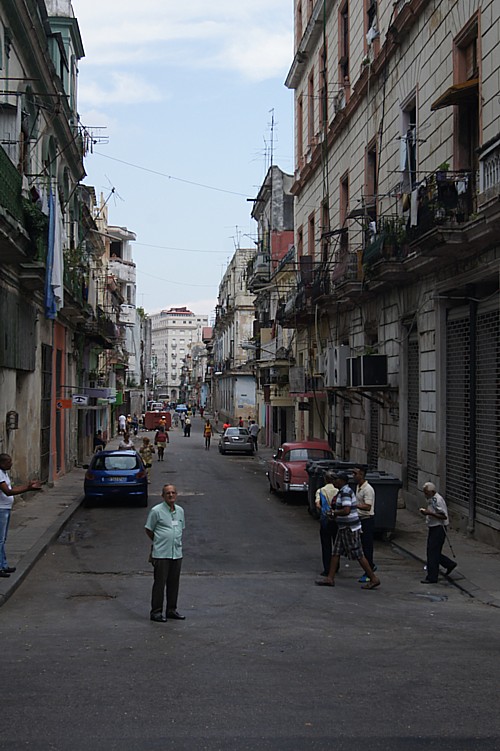
The neighborhoods around Old
Havana may look scary to some who are accustomed to more modern cities but
they are really safe to walk through. Along those streets life is lived with
gusto. In those neighborhoods you will find people repairing shoes,
bicycles, operating small bakeries, small sandwich shops, tiny beauty salons
and myriad other trades.
In the evenings between 3pm
and 8pm you see the older residents sitting outside chatting to each other,
men playing dominoes and children playing in the street. Near those
buildings that have Wi-Fi, young people gather to connect to the Internet
and converse with each other. In the streets people call out to each other
and greet each other with smile and often a kiss. Friends stop to talk with
each other and exchange pleasantries.
As you look at everyday life
you can see that Cubans are very friendly people, not just to each other but
to strangers also. This is a Spanish speaking country but many speak
English, sometimes haltingly but listen carefully and you will understand.
People are happy to give directions, happy to talk to you, although some use
it as an excuse to try and sell you cigars or tours.
If you enter the supermarkets
in the local neighborhoods, you will be struck by how few goods of even
basic items exist on the shelves. On the streets there are vendors of local
fruit and vegetable and people stop to purchase although the quantities on
display are few. As you travel into the countryside more local fruits are
seen at roadside stalls. There is limited public transport with much use
made of bicycle taxis, horse drawn carts and local buses when available are
crowded.
While material goods may be
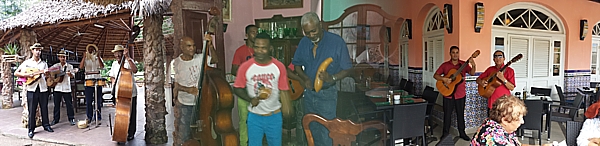
few, music is plentiful. This is a land where music is everywhere; live
bands and recorded music, not just in the evenings but at lunch time in
restaurants and bars. As you sit in the plazas you can hear groups of men
singing, small groups, often with a guitar, maracs and tumba, while people
walk along and greet each other. It is not just in Havana but throughout
this land music fills the air. At times it is a mournful melody but
hauntingly beautiful, while other times an up tempo beat that fills your
spirit and moves your feet. As you listen to la musica your mind says la
vida is bueno.
This is a land that has
suffered much but still the people respond to life with a joy. Maybe it is
the music, maybe the air, maybe the food, maybe even the shared experience
of doing without but there is definitely a Cuban Joie de Vivre.
Cuban music has been hugely
popular and influential throughout the world. It has been perhaps the most
popular form of regional music since the introduction of recording
technology. Cuban music has contributed to the development of a wide variety
of genre and musical styles around the globe. Cuban music in itself is a
fusion of musical traditions from the various people who have lived in Cuba
over the centuries with the most dominant fused traditions being West
African and European (especially Spanish) music.
The major genre of Cuban music is called Son and it is said that this form
laid the foundation for most of the later music. It arose in the eastern
part of the island, among Spanish-descended farmers, and is thought to have
been derived from changui, which also merged the Spanish guitar and African
rhythms. Changuí is a rapid form of Son from the eastern provinces
(Santiago and Guantánamo, known together as Oriente). Other types of Cuban
music include Salsa, Rhumba, Afro-Cuban Jazz and now Reggatón, the Cuban
version of Jamaican ragga and dancehall music.
Everywhere you go in Cuba the sound of music fills the air, often pumping
out from speakers in cafes or cars or even bicycle taxis. But it is the live
bands that truly give you the feel of the music. These live bands seem to be
everywhere, at restaurants at lunch and dinner time at nightclubs and even
in the plazas in the shade of the trees.
These bands can be large with trumpet, trombone, saxophone, tumba players
but often they are small 3 and 4 person bands with a guitar player, maracas,
tumba player and usually a bass player. One noticeable feature of these
small bands is that they have caught the capitalist fever but with a gentle
twist. Each band seems to have a CD of their music and when they have played
a few songs and observed your enjoyment of their music they approach you to
buy their CD.
To learn more about Cuba, visit our other Cuba Pages